
Arc Fusion Splicers: Technology, Evolution, and Their Role in Modern Fiber Networks

Sales May Start Growth. Finance and Accounting Sustain It.
February 19, 2026
Importance of Fiber Connector Inspection and Cleaning in Optical Networks
May 21, 2026
With the rapid expansion of fiber optic networks across telecom, railways, defense, and enterprise sectors, the importance of reliable fiber connectivity has never been greater. At the core of every high-performance fiber network lies a critical process—optical fiber splicing. Among the available methods, arc fusion splicing has emerged as the most trusted and widely adopted technology for achieving low-loss, permanent fiber connections.
The Evolution of Fiber Splicing
In the early days of fiber optic deployment, connecting two fibers posed a significant challenge. Mechanical splicing methods were commonly used, but they often resulted in higher insertion losses and lower long-term reliability.
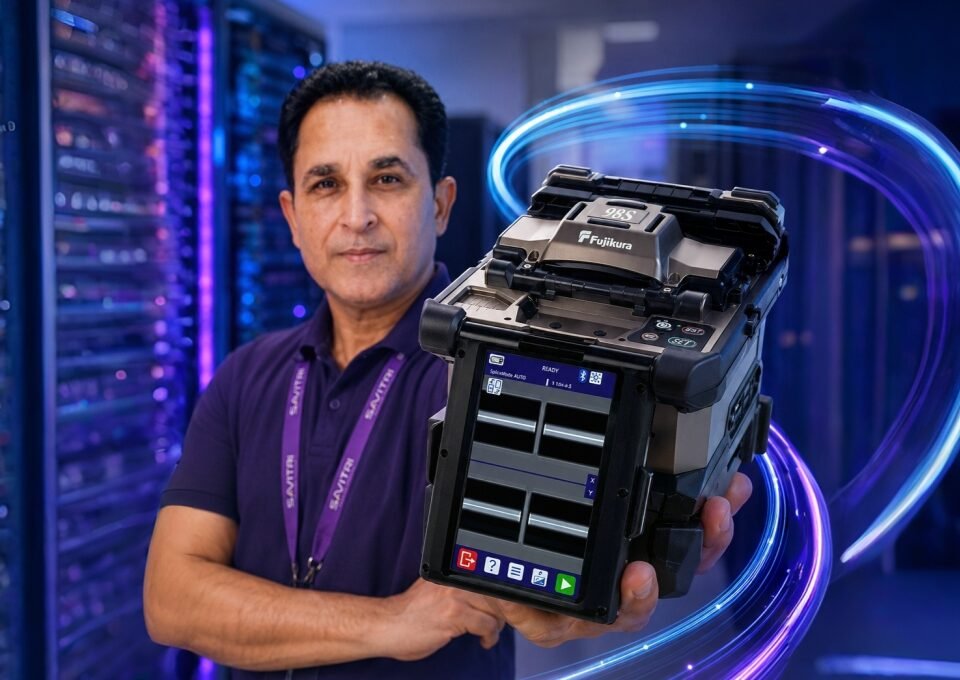
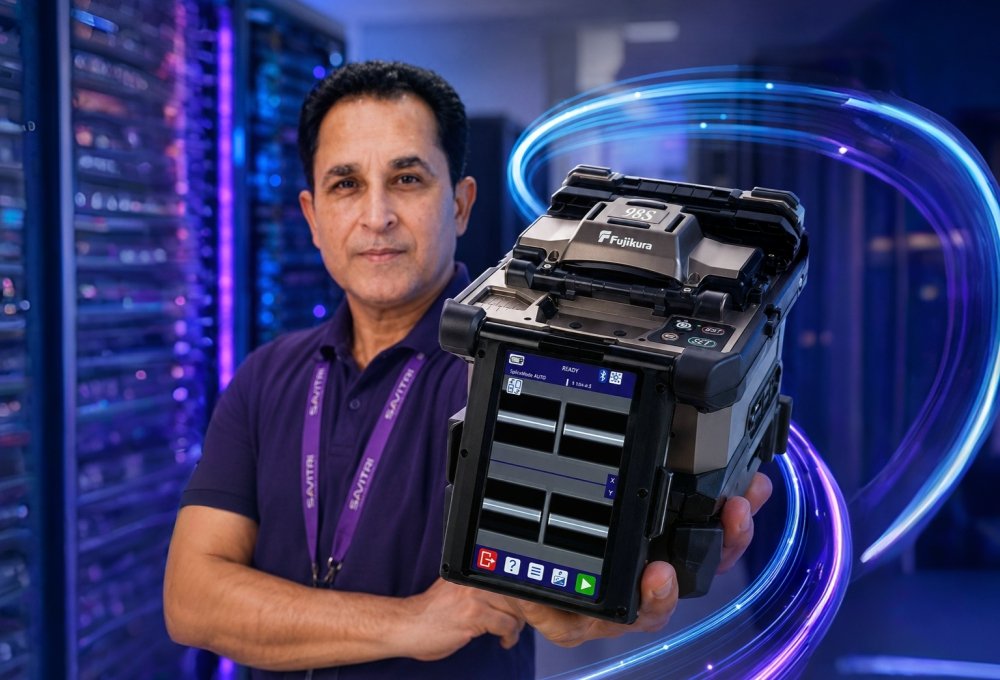
A major breakthrough came when Fujikura Ltd. introduced the first arc fusion splicer between 1977 and 1979. This innovation used an electric arc to fuse fiber ends, creating a continuous optical path with minimal loss. It marked the beginning of a new era in fiber optic connectivity.
How Arc Fusion Splicing Works
Arc fusion splicing is built on a precise and controlled process to ensure seamless light transmission:
- Fiber Preparation – Fibers are stripped and precisely cleaved
- Alignment – Fibers are accurately positioned for optimal core matching
- Fusion – An electric arc melts and permanently joins the fiber ends
- Protection – A heat-shrink sleeve is applied to secure the joint
Each step is critical in achieving a low-loss, high-strength splice.
Fiber Alignment Technologies
Alignment technology plays a decisive role in splice quality. Over time, three primary methods have evolved:
- Core Alignment
Aligns the actual light-carrying core using advanced imaging and processing systems. This method delivers the highest accuracy and lowest splice loss, making it ideal for backbone and mission-critical networks. - Active V-Groove (Clad Alignment)
Aligns the outer cladding of the fiber. It is cost-effective and widely used in FTTH and access network deployments. - Fixed V-Groove Alignment
Uses a predefined mechanical structure for alignment. Suitable for basic, low-cost applications where ultra-low loss is not critical.
Categories of Modern Fusion Splicers
Today’s fusion splicers are designed to meet diverse application needs:
- Core Alignment Splicers – High precision for backbone and critical infrastructure
- Clad Alignment Splicers – Cost-effective solutions for ISP, CATV, and FTTH networks
- Ribbon Splicers – Ideal for high-density, mass fiber splicing
Modern systems emphasize speed, accuracy, ease of use, and long-term reliability, enabling technicians to maintain consistent performance in the field.
Why Splice Quality Matters
In high-speed communication networks, even minimal splice loss can have a significant impact. Poor splicing can lead to:
- Signal degradation and increased attenuation
- Network instability or failures
- Higher maintenance and operational costs
Ensuring high-quality fusion splicing is therefore essential for building reliable and scalable networks.
The Backbone of Modern Connectivity
Advanced arc fusion splicing technology enables ultra-low loss connections, ensuring high network reliability and long-term stability across diverse environments.
From its invention to today’s intelligent, highly automated systems, arc fusion splicing has become the backbone of modern fiber networks. As global data demand continues to rise, the focus is no longer just on deploying fiber—but on ensuring that every splice meets the highest standards of precision, quality, and performance.