
Importance of Fiber Connector Inspection and Cleaning in Optical Networks

Arc Fusion Splicers: Technology, Evolution, and Their Role in Modern Fiber Networks
May 7, 2026
Smart OTDR Series – Flexible, Scalable & Future-Ready Fiber Testing Tool
June 1, 2026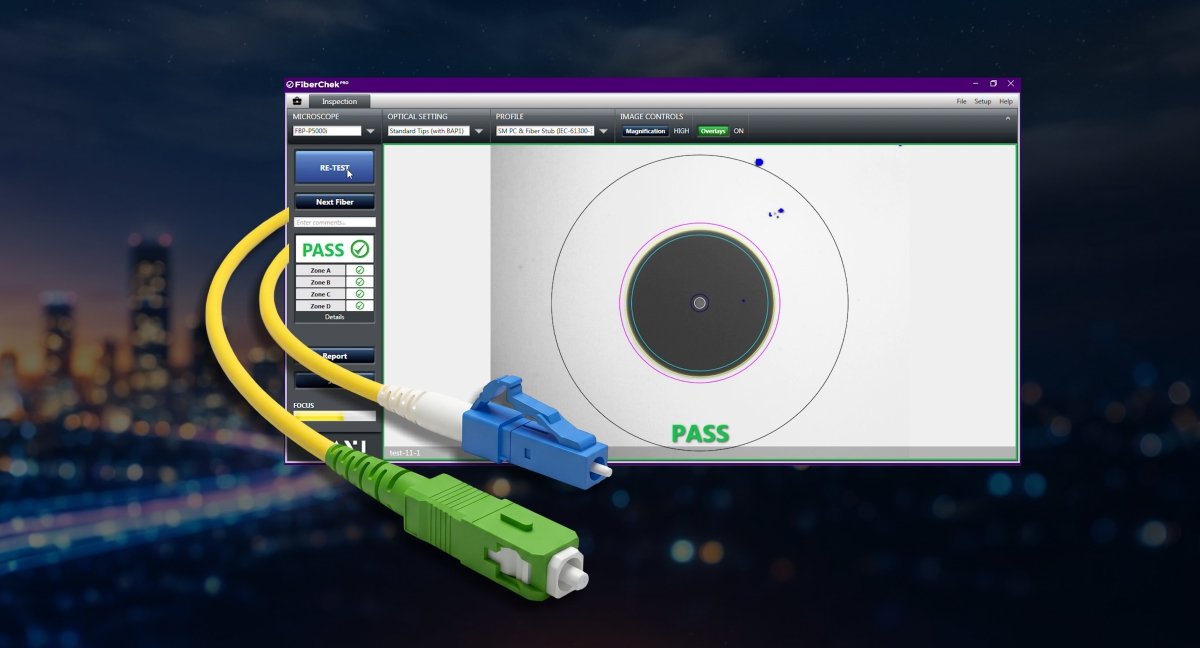
Fiber optic networks form the backbone of modern communication systems. The long-term performance and reliability of any optical network largely depend on the health of the fiber infrastructure.
Whenever a network issue occurs in the field, engineers typically focus on checking fiber health using OTDRs, laser sources, and power meters to identify losses or faults. However, in many cases, the actual cause of network degradation is not the fiber itself, but the condition of the fiber connectors and patch cords.
Industry experience shows that nearly 70% of fiber network issues are related to dirty or damaged connectors. Even microscopic dust particles or contamination on fiber patch cords can create significant insertion loss, back reflection, and signal degradation, ultimately affecting network performance and potentially damaging expensive optical equipment.
Effect of Dust and Contamination
Fiber patch cords are commonly used for final connectivity between optical distribution systems, FDMs equipment, testing instruments, and network devices. Every new patch cord is supplied with a protective dust cap to prevent contamination.
The fiber core inside a single-mode connector is extremely small, approximately 9 microns in diameter. Even slight accidental contact with fingers can contaminate the connector surface.
Dirty connectors can cause:
- Increased insertion loss
- High back reflection
- Signal attenuation
- Network instability
- Potential equipment damage
Therefore, maintaining connector cleanliness is one of the most critical aspects of fiber network maintenance.
Inspect Before You Connect (IBYC)
One of the most important principles in fiber maintenance is:
“IBYC – Inspect Before You Connect”
This means every connector must be inspected before it is connected to any network equipment.
The standard inspection procedure includes:
- Inspect the connector
- Analyze the inspection result
- Clean the connector if contamination is detected
- Reinspect after cleaning
- Connect only after the connector passes inspection
This process helps prevent unnecessary troubleshooting and protects network equipment from optical contamination.
Fiber Inspection Using a Digital Fiber Microscope
To inspect connector cleanliness, engineers use a specialized device called a Digital Fiber Microscope. This device allows detailed visual inspection of fiber connectors under high magnification to identify contamination or physical damage.
The microscope typically includes:
- Interchangeable inspection tips for different connector types
- Support for SC, FC, LC, and various other connector interfaces depending on application requirements
Fiber Inspection Process
The inspection process begins by inserting the fiber connector into the inspection tip. A magnified image of the connector end face then appears on the display screen.
Although the connector may appear clean to the naked eye, only automated IEC-standard analysis can determine whether the connector is truly contamination-free.
The inspection software performs an IEC-compliant pass/fail analysis and identifies contamination zones on the connector end face.
Connector Cleaning Process
If a connector fails inspection, it must be cleaned using approved fiber cleaning tools.
Common cleaning tools include:
- One-click cleaners
- Fiber cleaning sticks
- Specialized connector cleaning kits
After cleaning, the connector must always be reinspected. Cleaning alone does not guarantee that contamination has been completely removed.
In some cases, multiple cleaning cycles may be required before the connector successfully passes inspection.
Once the connector achieves a pass result, it is safe to connect it to network equipment.
Importance of Connector Maintenance in Fiber Networks
In many field scenarios, engineers spend significant time troubleshooting fiber links using OTDRs and power measurements, while the actual issue may simply be a contaminated patch cord connector.
Practical field experience has shown that cleaning or replacing faulty connectors resolves the majority of fiber network problems without requiring deeper fiber troubleshooting.
Therefore, connector inspection should always be the first step during fiber maintenance, testing, and fault analysis. Proper inspection and cleaning practices not only improve network reliability and performance but also help extend the life of valuable optical equipment.